How Mortgage Interest Rates Are Determined and Why They Matter

How Mortgage Interest Rates Are Determined and Why They Matter

When buying a home, few things affect your finances as much as the mortgage interest rate you receive. Even a small difference—say 5.0% versus 5.5%—can add up to tens of thousands of dollars over the life of a loan. But how are mortgage interest rates determined, and why do they matter so much to homeowners and investors alike?

This guide breaks down the factors that influence mortgage interest rates, how they affect your monthly payments, and what you can do to secure the best possible deal.

What Are Mortgage Interest Rates?

A mortgage interest rate is the cost of borrowing money to buy a property. It’s expressed as a percentage of your loan balance and is included in your monthly mortgage payment.

  • Principal: The original loan amount.
  • Interest: The lender’s charge for lending you money, based on your rate.
  • Monthly payment: A combination of principal and interest, plus taxes and insurance (if applicable).

How Mortgage Interest Rates Are Determined

Mortgage rates are shaped by a mix of global, national, and personal financial factors.

1. Central Bank Policies

  • Central banks (like the Federal Reserve, European Central Bank, or Bank of England) influence lending costs by adjusting benchmark rates.
  • When central banks raise rates to control inflation, mortgage rates usually rise too.

2. Inflation Trends

  • High inflation reduces the purchasing power of money, prompting lenders to demand higher rates.
  • Lower inflation generally supports lower mortgage rates.

3. Bond Market Yields

  • Mortgage rates often follow government bond yields (like U.S. Treasuries or German Bunds).
  • When bond yields go up, mortgage rates usually climb.

4. Lender Operating Costs and Risk Premiums

  • Lenders build in a margin to cover risks, defaults, and operating expenses.
  • Riskier lending environments lead to higher rates.

5. Borrower-Specific Factors

Your personal financial profile plays a major role:

  • Credit score: Higher scores usually mean lower rates.
  • Down payment: A bigger down payment reduces lender risk.
  • Debt-to-income ratio (DTI): Lower DTI makes you a safer borrower.
  • Loan term: Shorter terms often carry lower rates.

Why Mortgage Interest Rates Matter

1. Impact on Monthly Payments

A lower rate directly reduces your monthly mortgage cost.

Example:

  • $200,000 loan at 5% = $1,073/month.
  • $200,000 loan at 6% = $1,199/month.
    That’s $126 more each month, or over $45,000 extra over 30 years.

2. Home Affordability

  • Higher rates reduce the amount you can borrow for the same budget.
  • Lower rates make homeownership more accessible.

3. Long-Term Wealth Building

  • Lower interest rates mean more money goes toward principal and equity.
  • Over time, this builds financial security.

4. Investment Returns

For real estate investors, interest rates affect rental property profitability and cash flow.

Fixed vs. Variable Mortgage Interest Rates

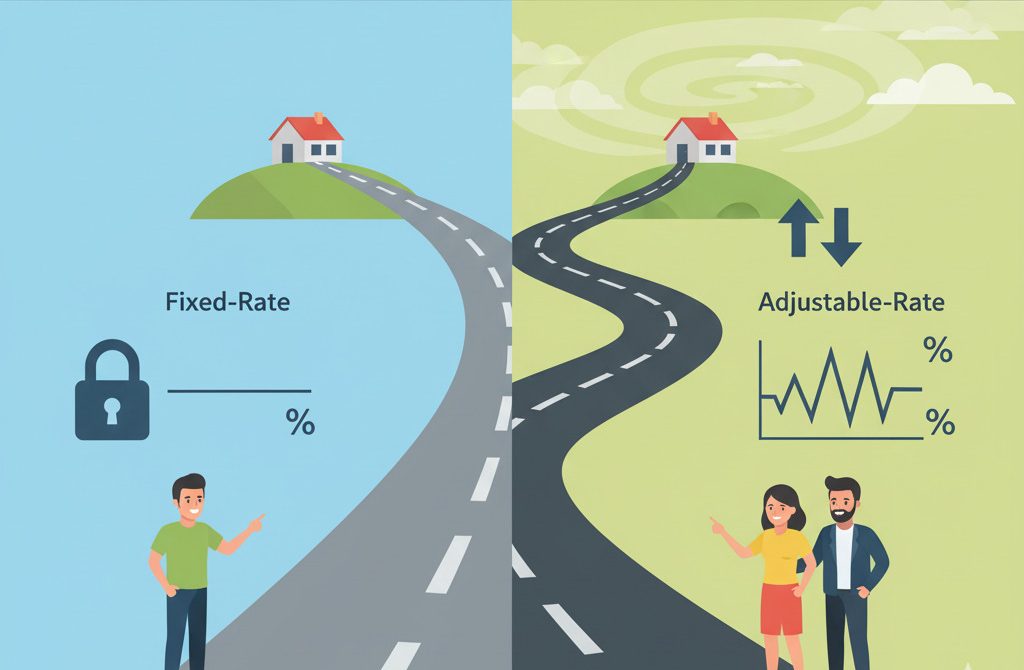
  • Fixed-rate mortgages: The interest rate stays the same for the entire loan term. Great for stability.
  • Variable/adjustable-rate mortgages (ARMs): The rate changes over time, usually tied to a market index. Riskier but may start lower.

How to Get the Best Mortgage Interest Rate

  1. Improve Your Credit Score

    • Pay bills on time, reduce debt, and avoid new credit inquiries.

  2. Increase Your Down Payment

    • Lenders may reward a 20% or higher down payment with better rates.

  3. Shop Around

    • Compare rates from banks, credit unions, and online lenders.

  4. Choose the Right Loan Term

    • 15-year loans usually have lower rates than 30-year loans.

  5. Consider Timing

    • Economic conditions, inflation, and central bank moves affect rates. Lock in when rates are favorable.

Common Misconceptions About Mortgage Interest Rates

  • Myth 1: Everyone gets the same rate.

Reality: Rates are highly personalized.

  • Myth 2: The lowest advertised rate is always the best.

Reality: Closing costs and fees also matter.

  • Myth 3: Once you get a rate, you’re stuck forever.

Reality: Refinancing allows you to change your rate later.

Mortgage Interest Rate Impact on Monthly Payments

Here’s an example based on a $200,000 loan with a 30-year term:

Interest RateMonthly PaymentTotal Interest Paid (30 years)Total Cost of Loan
4.0%$955$143,739$343,739
4.5%$1,013$164,813$364,813
5.0%$1,073$193,256$393,256
5.5%$1,136$218,694$418,694
6.0%$1,199$231,676$431,676

Key Takeaways:

  • A 1% increase (from 5.0% to 6.0%) raises monthly payments by $126.
  • Over 30 years, that adds up to $38,420 more in interest.
  • Even a half-percent difference can save or cost you tens of thousands.

FAQs on Mortgage Interest Rates

What exactly are mortgage interest rates?

They are the cost of borrowing money from a lender, expressed as a percentage of your loan balance.

Who decides mortgage interest rates?

Rates are influenced by central banks, the bond market, inflation, and lender risk assessments.

Why do mortgage interest rates change daily?

They fluctuate with market conditions, investor demand for bonds, and economic news.

Do I have control over my mortgage interest rate?

Yes—your credit score, down payment, and loan term can significantly affect your rate.

What’s the difference between APR and interest rate?

APR includes the interest rate plus fees, giving a more complete cost picture.

Are fixed or variable rates better?

Fixed rates offer stability, while variable rates may save money short term but carry risk.

How do inflation and interest rates connect?

Higher inflation usually leads to higher mortgage interest rates.

Can I lower my rate after taking a mortgage?

Yes, through refinancing if market rates drop or your credit improves.

Do all countries have the same mortgage interest rates?

No, they vary by economic conditions, lending standards, and government policies.

How much does a 1% difference in rate matter?

A lot—over 30 years, it can mean tens of thousands in extra interest.

Are online lenders’ rates better than banks’?

Sometimes, but always compare total costs, not just advertised rates.

When is the best time to lock in a mortgage rate?

When you’re satisfied with the rate and ready to proceed, especially if rates are expected to rise.

Conclusion

Mortgage interest rates may seem like just another number, but they carry huge financial weight. Understanding how they’re determined—and what you can do to influence your personal rate—can save you money, boost your home affordability, and improve your long-term wealth.

Whether you’re buying your first home or refinancing, paying close attention to mortgage interest rates is one of the smartest financial moves you can make.

Understanding Mortgage Amortization: How Your Payments Are Structured

Understanding Mortgage Amortization: How Your Payments Are Structured

When you take out a home loan, you don’t just pay back the money you borrowed—you also pay interest to the lender. But how are these payments structured over time? This is where mortgage amortization comes in. Understanding it can help you plan your finances, reduce interest costs, and even pay off your home faster.

What Is Mortgage Amortization?

Mortgage amortization is the process of gradually paying off a loan through scheduled monthly payments. Each payment is split between:

  • Principal – the portion that reduces your loan balance.
  • Interest – the lender’s charge for borrowing money.

At the beginning of the loan term, a larger share of your payment goes toward interest. Over time, more goes toward the principal.

How Mortgage Amortization Works

Imagine you take a 30-year fixed-rate mortgage. Even though your monthly payment stays the same, the way it’s applied changes:

  • Early years: Most of your payment goes to interest.
  • Later years: More of your payment goes toward the principal.

This gradual shift is called an amortization schedule, a table that shows how each payment is allocated.

Example of Mortgage Amortization

Let’s say you borrow $200,000 at 5% interest for 30 years.

  • Monthly payment: about $1,073.
  • In the first payment, around $833 goes to interest and $240 to principal.
  • By the 20th year, the majority of each payment goes to principal.

This shows how time affects the breakdown of your payments.

Factors That Affect Mortgage Amortization

Several elements influence your amortization schedule:

Loan Term

  • Shorter terms (15 years) mean higher payments but faster payoff.
  • Longer terms (30 years) mean lower payments but more total interest.

Interest Rate

Higher rates mean more money goes toward interest, especially early on.

Extra Payments

Paying a little extra toward the principal each month can shorten your loan term and save thousands in interest.

Loan Type

  • Fixed-rate loans have consistent payments.
  • Adjustable-rate mortgages may change payment amounts after adjustments.

Benefits of Understanding Mortgage Amortization

  • Better budgeting – Know how much of your payment builds equity.
  • Interest savings – Plan extra payments strategically.
  • Homeownership goals – Estimate when you’ll fully own your property.
  • Refinancing decisions – See how starting over affects total interest.

Sample Mortgage Amortization Schedule (First Year)

Here’s a simplified example based on a $200,000 loan at 5% interest over 30 years (monthly payment ≈ $1,073):

Payment #Total PaymentInterest PaidPrincipal PaidRemaining Balance
1$1,073$833$240$199,760
2$1,073$832$241$199,519
3$1,073$831$242$199,277
4$1,073$830$243$199,034
5$1,073$829$244$198,790
6$1,073$828$245$198,545
7$1,073$826$247$198,298
8$1,073$825$248$198,050
9$1,073$824$249$197,801
10$1,073$823$250$197,551
11$1,073$822$251$197,300
12$1,073$821$252$197,048

What this shows:

  • Early payments mostly cover interest, with only small amounts going toward the principal.
  • Over time, more of your payment reduces the loan balance, and less goes to interest.

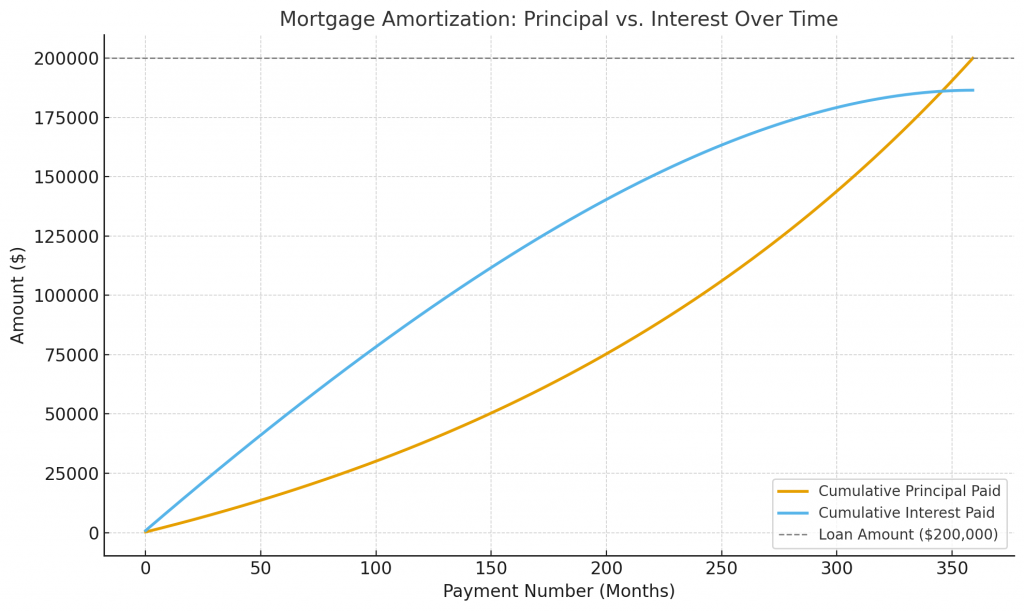
Here’s the visual chart showing how mortgage payments are split:

  • In the early years, interest dominates.
  • Over time, principal takes over, helping you build equity.
  • The dashed line marks the original loan amount ($200,000).

Tips to Manage Your Mortgage Amortization

  • Make biweekly payments instead of monthly to pay off faster.
  • Apply windfalls (bonuses, tax refunds) toward principal.
  • Refinance to a shorter term if you can afford higher payments.
  • Track your amortization schedule regularly to stay on top of progress.

FAQs About Mortgage Amortization

What is mortgage amortization in simple terms?

It’s the process of paying off your loan over time through regular payments of principal and interest.

Do all mortgages use amortization?

Most do, but some special loans (like interest-only mortgages) work differently.

Why do I pay more interest at the start of my mortgage?

Because interest is calculated on the remaining loan balance, which is highest at the beginning.

Can I speed up my mortgage amortization?

Yes, by making extra payments toward the principal.

What is an amortization schedule?

A table showing how each payment is divided between principal and interest.

How does loan length affect amortization?

Shorter loans build equity faster and reduce total interest.

What happens if I refinance my mortgage?

Your amortization schedule resets with the new loan.

Is biweekly payment better than monthly?

Yes, because you make one extra payment per year, shortening the loan term.

Do adjustable-rate mortgages affect amortization?

Yes, because your payment amounts may change when interest rates reset.

How does paying extra on principal help?

It reduces your loan balance faster, lowering future interest costs.

What is negative amortization?

When payments don’t cover interest, causing your loan balance to increase instead of decrease.

How do I calculate my own mortgage amortization?

You can use online mortgage calculators or request an amortization schedule from your lender.

Final Thoughts

Understanding mortgage amortization gives you control over your home loan. By knowing how payments are structured, you can make smarter financial decisions—whether that means refinancing, paying extra on principal, or sticking to your schedule. The more you understand amortization, the more effectively you can build equity and achieve financial freedom through homeownership.

Fixed-Rate vs. Adjustable-Rate Mortgages: Which One Is Right for You?

Fixed-Rate vs. Adjustable-Rate Mortgages: Which One Is Right for You?

When buying a home, one of the most important decisions you’ll face is choosing between a fixed-rate mortgage and an adjustable-rate mortgage (ARM). Both options have unique advantages and drawbacks, and the right choice depends on your financial situation, risk tolerance, and long-term goals. This guide on fixed vs adjustable rate mortgages will help you understand how they work, their pros and cons, and how to decide which is best for you.

What Is a Fixed-Rate Mortgage?

A fixed-rate mortgage is a home loan where the interest rate remains the same for the entire term of the loan. Whether you choose a 15-, 20-, or 30-year term, your monthly principal and interest payments will stay constant.

Key Benefits of Fixed-Rate Mortgages:

  • Predictability – Your payments never change, making budgeting easier.
  • Long-term security – Ideal if you plan to stay in your home for many years.
  • Protection from interest rate hikes – You won’t be affected if market rates rise.

Potential Downsides:

  • Higher initial interest rates compared to ARMs.
  • Less flexibility if you plan to move or refinance soon.

What Is an Adjustable-Rate Mortgage (ARM)?

An adjustable-rate mortgage (ARM) starts with a lower interest rate that adjusts periodically based on market conditions. For example, a 5/1 ARM means the interest rate is fixed for the first 5 years, then adjusts annually.

Key Benefits of Adjustable-Rate Mortgages:

  • Lower initial rates – Great for reducing payments in the early years.
  • Cost savings – Ideal if you plan to sell or refinance before the rate adjusts.
  • Potential benefit from falling interest rates – Your payments could decrease.
  • Potential Downsides:
  • Uncertainty – Payments may increase significantly after the initial fixed period.
  • Harder to budget long-term – Riskier if you plan to stay in your home long term.
  • Complex terms – Caps, margins, and adjustment rules can be confusing.

Fixed vs Adjustable Rate Mortgages: A Side-by-Side Comparison

FeatureFixed-Rate MortgageAdjustable-Rate Mortgage (ARM)
Interest RateConstant for the life of the loanStarts lower, changes periodically
Monthly PaymentsStable and predictableMay rise or fall over time
Best ForLong-term homeownersShort-term homeowners or those expecting income growth
Risk LevelLow – no surprisesHigher – depends on market rates
FlexibilityLess flexibleMore flexible, especially for short-term plans

How to Decide Which Mortgage Is Right for You

When comparing fixed vs adjustable rate mortgages, consider these factors:

How long you plan to stay in the home

  • Long-term: Fixed-rate is usually better.
  • Short-term: ARM may save you money.

Your risk tolerance

  • Prefer stability? Choose fixed-rate.
  • Comfortable with some uncertainty? ARM could work.

Current interest rate environment

  • If rates are low, locking in a fixed-rate may be wise.
  • If rates are high but expected to fall, an ARM could help.

Your income stability

  • Fixed-rate fits those with steady income.
  • ARM may suit those expecting higher income in the future.

FAQs About Fixed vs Adjustable Rate Mortgages

What is the main difference between fixed and adjustable-rate mortgages?

Fixed-rate mortgages have constant interest rates, while ARMs start low but change over time.

Are adjustable-rate mortgages riskier?

Yes, because future payments depend on market interest rates.

Which loan type has lower initial payments?

ARMs usually start with lower payments compared to fixed-rate mortgages.

Is a fixed-rate mortgage always better?

Not necessarily—it’s better for long-term stability, but ARMs can save money short-term.

What does a 5/1 ARM mean?

It means the rate is fixed for 5 years, then adjusts annually.

Can I refinance an ARM into a fixed-rate loan later?

Yes, many homeowners refinance if rates start rising.

Do ARMs ever result in lower payments over time?

Yes, if market interest rates decrease.

Why do fixed-rate mortgages have higher rates than ARMs?

Lenders charge more for the security of a fixed rate.

Which mortgage type is best during high inflation?

A fixed-rate mortgage, since it locks in your payments.

What happens when an ARM adjusts?

Your interest rate and monthly payment may go up or down.

Do ARMs have limits on how much rates can rise?

Yes, they typically include caps on adjustments and lifetime limits.

How do I choose between fixed vs adjustable rate mortgages?

Base your choice on how long you’ll stay in the home, your risk tolerance, and market conditions.

Final Thoughts

Choosing between fixed-rate and adjustable-rate mortgages is one of the biggest financial decisions you’ll make as a homeowner. Fixed-rate mortgages offer stability and peace of mind, while ARMs provide lower initial costs and flexibility. The right choice depends on your time horizon, financial stability, and comfort with risk. By carefully weighing your options, you can select the mortgage that best fits your long-term financial goals.

What Is a Mortgage? A Beginner’s Guide to Home Financing

What Is a Mortgage? A Beginner’s Guide to Home Financing

For most people, buying a home is one of the biggest financial decisions they will ever make. Since very few individuals can afford to purchase a home outright with cash, mortgages exist as a practical way to finance a property. But for first-time buyers, the mortgage world can feel overwhelming—filled with jargon, different loan types, and complicated approval processes.

That’s where this beginners guide to mortgages comes in. We’ll break down the essentials: what a mortgage is, how it works, the types available, and the steps to get one. Whether you’re planning to buy your first home, upgrade to a bigger property, or simply want to understand home financing, this guide gives you the foundation you need to make informed choices.

What Is a Mortgage?

A mortgage is essentially a loan you take from a bank or lender to buy a house. Instead of paying the full price upfront, you borrow the money and repay it over a set number of years—usually 15, 20, or 30. The house itself acts as collateral, meaning the lender can take it back (through foreclosure) if you fail to make your payments.

Think of it as a partnership:

  • You bring a down payment (your share of the cost).
  • The lender provides the rest of the funds.
  • You repay in monthly installments that include principal, interest, taxes, and insurance.

How Do Mortgages Work?

Mortgages are structured as long-term loans with regular monthly payments. Each payment usually covers four key components, often remembered with the acronym PITI:

  1. Principal – The actual amount borrowed from the lender.
  2. Interest – The lender’s fee for letting you borrow money, expressed as an annual percentage rate (APR).
  3. Taxes – Property taxes owed to your local government, often collected by the lender and held in escrow.
  4. Insurance – Homeowners insurance, and sometimes mortgage insurance if you made a small down payment.

Over time, as you continue making payments, you pay down more principal and less interest—a process called amortization.

Key Mortgage Terms Every Beginner Should Know

To feel confident when talking to lenders, you’ll want to understand these basic terms:

  • Down Payment: The initial amount you pay upfront (commonly 10–20% of the home’s price).
  • Loan Term: The length of time you have to repay the loan (e.g., 30 years).
  • Fixed-Rate Mortgage: Interest rate stays the same throughout the loan.
  • Adjustable-Rate Mortgage (ARM): Interest rate changes periodically after an initial fixed period.
  • Escrow: An account managed by the lender to hold taxes and insurance payments.
  • Equity: The portion of your home you actually own (your share versus the bank’s).
  • Closing Costs: Fees and charges you pay when finalizing the mortgage.

Types of Mortgages

Different buyers have different needs, so mortgages come in several varieties. Here’s a breakdown:

1. Fixed-Rate Mortgage

  • Definition: The interest rate remains constant throughout the loan term.
  • Best for: Buyers who want predictable payments and long-term stability.
  • Pros: Stability, easy to budget.
  • Cons: May be higher initially than adjustable loans.

2. Adjustable-Rate Mortgage (ARM)

  • Definition: Starts with a lower fixed rate for a few years, then adjusts periodically based on market rates.
  • Best for: Buyers planning to sell or refinance before the rate adjusts.
  • Pros: Lower initial payments.
  • Cons: Risk of rising payments in the future.

3. Interest-Only Mortgage

  • Definition: You pay only the interest for a set period, then start paying principal.
  • Pros: Low initial payments.
  • Cons: Risky if property value falls or if you can’t handle higher payments later.

4. Government-Backed Loans (varies by country)

In some countries, governments offer special mortgage programs for first-time buyers, veterans, or low-income families.

Examples: FHA loans (U.S.), Help to Buy (U.K.), First Home Guarantee (Australia), Canada’s CMHC-insured mortgages.

5. Jumbo Loans

  • For very expensive properties that exceed standard loan limits.
  • Require higher credit scores and larger down payments.

Steps to Getting a Mortgage

Here’s what you can expect during the process:

  1. Check Your Credit Score – Lenders use it to assess your reliability.
  2. Determine Your Budget – Use online calculators to estimate affordability.
  3. Get Pre-Approved – A lender confirms how much they may lend you.
  4. House Hunting – Find a property within your budget.
  5. Submit Mortgage Application – Provide income, assets, and debt details.
  6. Underwriting – Lender reviews your application and documents.
  7. Closing – Sign documents, pay closing costs, and receive the keys.

How to Qualify for a Mortgage

1. Credit Score

The higher your score, the better your interest rate.

2. Debt-to-Income Ratio (DTI)

Lenders prefer your monthly debt payments (including mortgage) not to exceed 36–43% of your gross income.

3. Down Payment

The larger your down payment, the smaller your loan and monthly payments.

4. Stable Income

Proof of steady employment and income is essential.

Costs Involved in a Mortgage

Buying a home involves more than just monthly payments. Here are the main costs:

  • Closing Costs: 2–5% of the home price.
  • Property Taxes: Ongoing, varies by location.
  • Insurance: Homeowners and possibly mortgage insurance.
  • Maintenance: Regular upkeep and unexpected repairs.

Pros and Cons of Mortgages

Pros

  • Makes homeownership accessible.
  • Builds equity over time.
  • Potential tax advantages in some countries.

Cons

  • Long-term debt commitment.
  • Interest costs can be significant.
  • Risk of foreclosure if payments are missed.

Common Mistakes First-Time Buyers Make

  • Buying more house than they can afford.
  • Ignoring extra costs (taxes, insurance, maintenance).
  • Not shopping around for better mortgage rates.
  • Making large purchases before closing (which affects credit).

Tips for Choosing the Right Mortgage

  • Compare rates from multiple lenders.
  • Decide between fixed and adjustable rates based on how long you’ll stay in the home.
  • Consider total loan costs, not just monthly payments.
  • Seek professional financial advice if unsure.

Alternatives to Traditional Mortgages

  • Rent-to-Own Agreements: Part of rent goes toward purchasing the home.
  • Owner Financing: Seller provides financing instead of a bank.
  • Co-Ownership: Partnering with family or friends to buy property.

Real-Life Case Study: First-Time Buyer

Maria, a 29-year-old teacher, wanted to buy her first apartment. She saved up a 15% down payment and got pre-approved for a 25-year fixed-rate mortgage. By choosing a modest property within her budget, Maria secured predictable monthly payments and avoided stretching her finances too thin.

Conclusion

Mortgages may seem complicated at first, but once you understand the basics, the process becomes much less intimidating. The key is to know your financial situation, research your options, and choose the type of mortgage that best fits your long-term goals. With careful planning, your mortgage can become a stepping stone to building equity and long-term financial security.

FAQs About Beginners Guide to Mortgages

What is a mortgage in simple terms?

A mortgage is a loan you take to buy a home, with the property itself as collateral.

How long do mortgages usually last?

Common terms are 15, 20, or 30 years, though this varies by country.

Do I need a large down payment to get a mortgage?

Not always. Some programs allow as little as 3–5%, but higher down payments reduce your loan size and interest costs.

What’s the difference between fixed-rate and adjustable-rate mortgages?

Fixed rates stay the same for the entire loan; adjustable rates change after an initial period.

Can I get a mortgage with bad credit?

Yes, but interest rates will be higher, and options may be limited.

What are closing costs?

Fees paid at the end of the home-buying process, usually 2–5% of the home’s purchase price.

Is renting better than buying a home?

It depends on your lifestyle, financial stability, and long-term goals.

What happens if I miss a mortgage payment?

You may face late fees, credit score damage, and eventually foreclosure if payments are missed repeatedly.

Can I pay off my mortgage early?

Yes, but check if your lender charges prepayment penalties.

How much mortgage can I afford?

Most lenders suggest spending no more than 28–30% of your income on housing.

What is mortgage insurance?

Insurance that protects the lender if you default, usually required with small down payments.

Do mortgages exist outside the U.S.?

Yes—most countries offer mortgage products, though terms, regulations, and programs vary.

Building Passive Income Streams for a Secure Retirement

Building Passive Income Streams for a Secure Retirement

Retirement looks very different today than it did just a generation ago. With rising life expectancy, volatile markets, and uncertainty around pensions, retirees need more than a lump sum of savings to feel financially secure. That’s where passive income for retirement comes in.

Passive income refers to money earned with minimal day-to-day involvement. Instead of drawing down savings and worrying about running out, retirees can design multiple income streams that continue to pay them throughout life. Think of it as building your own pension plan—customized, diversified, and adaptable.

This guide explores how to create passive income for retirement, the most common strategies available, the risks involved, and how to integrate them into a sustainable retirement plan.

Why Passive Income Is Critical for Retirement Security

1. Longevity Risk: Outliving Your Savings

The average life expectancy has increased dramatically in recent decades. A person retiring at 65 could easily live another 25–30 years. Passive income helps bridge this gap, ensuring financial resources last as long as you do.

2. Inflation Protection

A retirement plan that relies solely on fixed savings loses value over time. Passive income sources like dividend stocks or rental properties can increase in value, offering protection against inflation.

3. Flexibility Beyond Traditional Pensions

Unlike fixed pensions or government benefits, diversified passive income streams give retirees more financial freedom and adaptability.

4. Peace of Mind

A steady flow of passive income reduces the stress of constantly monitoring your account balance and worrying about market downturns.

Popular Passive Income Streams for Retirement

1. Dividend-Paying Stocks

Dividend stocks remain one of the most popular strategies for generating passive income. Companies that pay dividends distribute part of their profits to shareholders, usually quarterly.

  • Why it works for retirees: Reliable income plus potential for stock price appreciation.
  • Risks: Dividends are not guaranteed; companies can reduce or eliminate them in tough times.
  • Tips: Focus on “Dividend Aristocrats” (companies with decades of consistent dividend growth).

2. Real Estate Investments

Real estate provides both capital appreciation and cash flow. You can invest directly in rental properties or indirectly via Real Estate Investment Trusts (REITs).

  • Direct ownership: Rental homes, apartments, or vacation properties.
  • Indirect ownership: REITs offer diversification without the hassle of property management.

Pros: Tangible asset, strong hedge against inflation.
Cons: Requires significant capital upfront; property markets can be cyclical.

3. Bonds and Fixed-Income Securities

Bonds provide predictable, fixed interest payments—an attractive option for retirees who want stability.

  • Government bonds: Typically lower risk but lower yield.
  • Corporate bonds: Higher yield, higher risk.
  • Municipal bonds (where applicable): May provide tax advantages.

Drawback: Bond yields may struggle to keep up with inflation.


4. Annuities

An annuity is a contract with an insurance company where you pay a lump sum in exchange for guaranteed income for life or a set period.

  • Pros: Predictable lifetime income.
  • Cons: Limited flexibility, high fees, and dependence on insurer’s solvency.

Annuities are best used to cover essential living expenses, while other passive income sources can support lifestyle and discretionary spending.

5. Peer-to-Peer (P2P) Lending

P2P platforms connect investors with borrowers, bypassing traditional banks. Investors earn interest as borrowers repay loans.

  • Pros: Attractive yields, portfolio diversification.
  • Cons: High default risk, low liquidity.

P2P lending should only make up a small portion of your retirement passive income portfolio due to risk.

6. Online Businesses & Royalties

Retirement doesn’t mean you stop creating. Many retirees build digital products (books, courses, apps) that continue generating royalties for years.

  • Examples: eBooks, online courses, stock photography, music licensing.
  • Pros: Scalable, global reach, very low ongoing costs.
  • Cons: Requires upfront work, technical knowledge, and marketing.

7. High-Yield Savings Accounts & Certificates of Deposit (CDs)

These aren’t glamorous, but they offer risk-free income.

  • High-yield savings accounts: Better than traditional savings, though rates can fluctuate.
  • CDs: Fixed interest rates for set periods; safer but less liquid.

Best for short-term reserves rather than primary retirement income.

8. Royalties from Intellectual Property

If you hold patents, copyrights, or creative works, royalties can provide passive income for decades. For example, an inventor may continue receiving royalties long after retirement.

9. Business Investments

Investing in businesses (e.g., franchises or silent partnerships) can generate steady income without requiring you to manage day-to-day operations.

Strategies to Build and Balance Passive Income

  1. Diversify your income streams: Don’t rely on a single source; blend stocks, bonds, real estate, and alternative assets.
  2. Start early: The earlier you build passive income, the longer compounding can work in your favor.
  3. Reinvest earnings: Before retirement, reinvest dividends and interest to grow your passive income base.
  4. Plan for taxes: Different sources of passive income are taxed differently depending on jurisdiction.
  5. Match assets to needs: Use guaranteed income (annuities, bonds) for essentials, and growth-oriented assets (stocks, real estate) for discretionary spending.

Risks to Consider

  • Market risk (stocks, REITs).
  • Liquidity risk (real estate, P2P lending).
  • Inflation risk (fixed-income products).
  • Default risk (corporate bonds, P2P loans).
  • Regulatory risk (tax changes on dividends, rental income, etc.).

Diversification and proper planning help mitigate these risks.

Real-Life Example: Blended Passive Income Portfolio

Imagine a retiree aiming for $40,000/year in passive income:

  • Dividend stocks: $15,000
  • Rental property: $12,000
  • Bonds: $6,000
  • Annuity payout: $5,000
  • Royalties/digital products: $2,000

This diversified mix reduces reliance on any single source and provides both stability and growth.

Conclusion

Building passive income for retirement is one of the most powerful strategies to achieve financial security and independence. Instead of worrying about depleting savings, retirees can design a portfolio of income streams tailored to their needs. The best approach blends stability, growth, and flexibility.

Start early, diversify, and plan for risks—and you’ll be able to enjoy your retirement years with confidence and peace of mind.

FAQs About Passive Income for Retirement

What is passive income for retirement?

It refers to income generated with minimal ongoing effort, such as dividends, rental income, or annuity payments.

Why is passive income important in retirement?

It provides consistent cash flow, reduces reliance on savings, and helps offset inflation.

What are the safest passive income sources for retirees?

Government bonds, annuities, and insured bank deposits are considered among the safest.

Can real estate be a reliable passive income source?

Yes, especially rental properties and REITs, though they carry market and management risks.

Are dividend stocks good for retirees?

Yes, they can provide both income and growth, but dividends are not guaranteed.

What role do annuities play in passive income?

They offer guaranteed lifetime income, making them a stable but less flexible option.

Is passive income taxed differently?

Yes, depending on the source and country, taxes can vary. Dividends, rental income, and interest are often taxed at different rates.

Can online businesses create passive income in retirement?

Yes, digital products, royalties, or affiliate marketing can provide ongoing income if built correctly.

How much passive income do I need for retirement?

It depends on lifestyle, expenses, and savings goals. A financial advisor can help calculate a tailored number.

What risks should retirees consider with passive income?

Market downturns, inflation, tenant issues, and defaults are common risks.

How can I start building passive income before retirement?

Begin investing in dividend stocks, real estate, or side businesses early to compound returns.

 Is it possible to live entirely on passive income in retirement?

Yes, with proper planning and diversification, many retirees achieve financial independence through passive income.

When to Consider Debt Settlement or Bankruptcy

When to Consider Debt Settlement or Bankruptcy

Navigate the complex world of financial relief with our expert guide on debt settlement and bankruptcy. Understand the key differences and make informed decisions about your financial future.

Navigating Financial Challenges

Financial difficulties can be overwhelming, leaving many individuals searching for a lifeline to escape the crushing weight of unmanageable debt. When traditional methods of debt repayment seem impossible, two primary options emerge: debt settlement and bankruptcy. Understanding the nuanced differences between these approaches can be the key to making a decision that protects your financial future and provides much-needed relief.

Understanding Debt Settlement

Debt settlement represents a strategic approach to managing overwhelming financial obligations. This process involves negotiating with creditors to pay a reduced amount that is less than the full balance you owe. Unlike bankruptcy, debt settlement aims to resolve debt while potentially preserving some aspects of your financial reputation.

How Debt Settlement Works

The debt settlement process typically begins when an individual or a specialized debt settlement company approaches creditors with a proposal. The core objective is to convince creditors that accepting a partial payment is more beneficial than risking receiving nothing at all. Creditors may be willing to accept a reduced payment, especially if they believe the alternative is complete default.

Potential Benefits of Debt Settlement

Financial relief through debt settlement can provide several advantages. Individuals may reduce their total debt burden significantly, potentially saving thousands of dollars. The process offers a more flexible alternative to bankruptcy, allowing for more personalized negotiation with creditors. Moreover, debt settlement can help avoid the more severe long-term consequences associated with bankruptcy.

Exploring Bankruptcy: A Comprehensive Overview

Bankruptcy represents a legal process designed to provide individuals and businesses with a fresh financial start when debt becomes unmanageable. It is a more formal and structured approach to addressing financial challenges, offering different chapters that cater to various financial situations.

Types of Bankruptcy

There are primarily two types of personal bankruptcy that individuals typically consider:

Chapter 7 Bankruptcy

Chapter 7 bankruptcy, often called liquidation bankruptcy, involves selling non-exempt assets to pay off creditors. This option provides a relatively quick path to debt relief, typically discharging most unsecured debts within a few months.

Chapter 13 Bankruptcy

Chapter 13 bankruptcy focuses on debt restructuring rather than complete elimination. Individuals create a repayment plan spanning three to five years, allowing them to keep their assets while gradually paying off their debts under court supervision.

Key Differences Between Debt Settlement and Bankruptcy

Understanding the distinctions between debt settlement and bankruptcy is crucial for making an informed financial decision. These approaches differ significantly in their methodology, long-term implications, and impact on an individual’s financial standing.

Impact on Credit Score

Debt settlement and bankruptcy both have substantial consequences for your credit score, but the extent varies. Debt settlement may result in a moderate credit score reduction, while bankruptcy can cause a more dramatic and long-lasting impact on your credit profile.

Legal Protection and Consequences

Bankruptcy provides legal protection through court proceedings, immediately stopping most collection activities. Debt settlement lacks this formal legal framework, leaving individuals more vulnerable to potential creditor actions during negotiations.

Long-Term Financial Implications

The long-term financial consequences differ significantly between these two approaches. Bankruptcy remains on credit reports for up to ten years, potentially making future credit acquisition challenging. Debt settlement, while also impacting credit, typically has a less severe and shorter-lasting effect.

Factors to Consider Before Choosing

Selecting between debt settlement and bankruptcy requires careful consideration of multiple factors. Personal financial situation, total debt amount, types of debt, and individual financial goals play crucial roles in making this decision.

Assessing Your Debt Landscape

A thorough evaluation of your total debt, including secured and unsecured obligations, provides critical insights. Some debts, such as student loans and certain tax obligations, may not be dischargeable through bankruptcy, influencing your decision-making process.

Financial Stability and Future Prospects

Consider your current income, potential for future earnings, and overall financial stability. These factors significantly impact the effectiveness of debt settlement or bankruptcy in providing meaningful financial relief.

Professional Guidance and Support

Navigating the complexities of debt resolution can be challenging. Seeking professional financial advice from credit counselors, bankruptcy attorneys, or financial advisors can provide personalized insights tailored to your specific situation.

The Role of Professional Counseling

Professional counselors can help you understand the intricate details of debt settlement and bankruptcy. They offer objective assessments, help you understand potential consequences, and guide you toward the most appropriate financial strategy.

Preparing for the Debt Resolution Process

Preparation is key to successfully managing debt through settlement or bankruptcy. Gathering comprehensive financial documentation, understanding your rights, and developing a clear strategy are essential steps.

Documentation and Financial Assessment

Compile a detailed inventory of your debts, income, assets, and expenses. This comprehensive overview provides a solid foundation for making informed decisions about debt resolution.

Potential Alternatives to Consider

While debt settlement and bankruptcy are significant options, they are not the only paths to financial recovery. Alternative approaches may provide viable solutions for some individuals.

Debt Consolidation

Debt consolidation involves combining multiple debts into a single loan with potentially lower interest rates. This approach can simplify debt management and reduce overall interest payments.

Negotiating Directly with Creditors

Some individuals find success by directly negotiating with creditors for reduced interest rates, extended payment terms, or temporary payment reductions.

Frequently Asked Questions About Debt Settlement and Bankruptcy

What is the primary difference between debt settlement and bankruptcy?

Debt settlement involves negotiating with creditors to pay a reduced amount, while bankruptcy is a legal process that either liquidates assets or creates a structured repayment plan.

How long do debt settlement and bankruptcy affect my credit score?

Debt settlement typically impacts credit scores for approximately seven years, whereas bankruptcy can remain on credit reports for up to ten years.

Can all types of debt be resolved through debt settlement or bankruptcy?

Not all debts are eligible. Certain obligations like student loans, alimony, child support, and some tax debts are generally not dischargeable through these methods.

Is debt settlement a guaranteed solution?

Debt settlement is not guaranteed. Creditors are not obligated to accept settlement offers, and the process requires skillful negotiation.

How much does debt settlement or bankruptcy cost?

Costs vary depending on individual circumstances. Bankruptcy often involves court fees and attorney costs, while debt settlement may include fees charged by negotiation services.

Can I choose between Chapter 7 and Chapter 13 bankruptcy?

Eligibility depends on your income, assets, and specific financial situation. A means test typically determines which bankruptcy chapter you qualify for.

What happens to my assets during debt settlement and bankruptcy?

In debt settlement, you typically retain your assets. Bankruptcy, particularly Chapter 7, may require liquidating non-exempt assets to repay creditors.

Verdict: Making an Informed Decision

Choosing between debt settlement and bankruptcy is a highly personal decision that requires careful consideration of your unique financial landscape. No universal solution fits every situation. The most effective approach involves thoroughly understanding your financial challenges, exploring all available options, and potentially seeking professional guidance.

Ultimately, the goal is to achieve financial stability and create a pathway toward economic recovery. Whether you choose debt settlement or bankruptcy, the most important step is taking proactive measures to address your financial challenges and rebuild your financial health.

Conclusion: Your Financial Journey

Financial challenges are temporary obstacles that can be overcome with strategic planning, informed decision-making, and perseverance. By understanding the nuances of debt settlement and bankruptcy, you empower yourself to make choices that align with your long-term financial goals.

Remember, financial recovery is a journey. Each step you take toward understanding and addressing your debt brings you closer to financial freedom and peace of mind.

How to Create a 5-Year Financial Plan for Stability and Growth

How to Create a 5-Year Financial Plan for Stability and Growth

Creating a robust financial plan isn’t just about managing money—it’s about building a sustainable financial stability plan that withstands life’s uncertainties while promoting steady growth. In today’s dynamic economic landscape, having a well-structured five-year financial roadmap is more crucial than ever. This comprehensive guide will walk you through the essential elements of crafting a personalized financial strategy that aligns with your goals and values.

Understanding the Importance of Long-term Financial Planning

Before diving into the specifics of creating your sustainable financial stability plan, it’s vital to understand why long-term planning matters. Financial stability isn’t achieved overnight; it requires careful consideration, consistent effort, and strategic thinking. A five-year plan provides the perfect balance between immediate action and future vision, allowing you to make informed decisions while maintaining flexibility for life’s inevitable changes.

Assessing Your Current Financial Position

The journey toward financial stability begins with a thorough evaluation of your present situation. This means taking an honest look at your income, expenses, assets, and liabilities. Understanding where you stand today is crucial for developing a sustainable financial stability plan that works for your unique circumstances.

Income Analysis

Your income forms the foundation of your financial plan. Consider all sources of revenue, including salary, investments, side hustles, and passive income streams. Understanding your income patterns helps in creating realistic financial projections and setting achievable goals within your sustainable financial stability plan.

Expense Evaluation

Tracking your spending habits provides valuable insights into your financial behavior. Categorize your expenses into fixed costs (like rent or mortgage payments) and variable expenses (such as entertainment and dining). This detailed analysis helps identify areas where you can optimize spending without sacrificing quality of life.

Setting Clear Financial Goals

A successful sustainable financial stability plan requires well-defined objectives. Your goals should be specific, measurable, achievable, relevant, and time-bound. Consider both short-term milestones and long-term aspirations when mapping out your five-year journey.

Emergency Fund Development

Building and maintaining an emergency fund is a cornerstone of any sustainable financial stability plan. Aim to save three to six months of living expenses in an easily accessible account. This financial buffer provides peace of mind and prevents derailment of your long-term goals during unexpected circumstances.

Debt Management Strategy

Creating a comprehensive debt reduction strategy is essential for long-term financial health. Prioritize high-interest debt while maintaining minimum payments on other obligations. Your sustainable financial stability plan should include specific targets for debt reduction over the five-year period.

Investment Planning for Growth

A well-rounded sustainable financial stability plan must include investment strategies that align with your risk tolerance and time horizon. Consider diversifying your portfolio across different asset classes to maximize potential returns while managing risk.

Retirement Planning Integration

Your five-year plan should complement your longer-term retirement goals. Consider increasing retirement contributions annually and taking full advantage of employer matching programs. This aspect of your sustainable financial stability plan helps ensure future financial security.

Risk Management and Insurance Coverage

Protecting your financial future requires appropriate insurance coverage. Review and adjust your policies regularly to ensure they align with your changing needs and circumstances. This protective element of your sustainable financial stability plan safeguards against potential setbacks.

Regular Plan Review and Adjustment

A sustainable financial stability plan isn’t static—it requires regular monitoring and adjustments. Schedule quarterly reviews to track progress and make necessary modifications based on changing circumstances or goals.

Leveraging Technology for Financial Management

Modern financial planning tools and apps can enhance your ability to track and manage your sustainable financial stability plan. Consider incorporating digital solutions for budgeting, investment tracking, and expense monitoring.

Building Multiple Income Streams

Diversifying your income sources strengthens your financial foundation. Your sustainable financial stability plan should include strategies for developing additional revenue streams through side businesses, passive investments, or skill monetization.

Tax Planning and Optimization

Efficient tax management is crucial for maximizing your financial growth. Include tax-saving strategies in your sustainable financial stability plan to minimize liabilities while maintaining compliance with regulations.

Estate Planning Considerations

While often overlooked, estate planning is an important component of a comprehensive sustainable financial stability plan. Consider creating or updating your will, establishing trusts, and designating beneficiaries for your assets.

Frequently Asked Questions

How often should I review my sustainable financial stability plan?

Conduct thorough reviews quarterly, with monthly check-ins on specific goals and metrics. Major life events should trigger immediate plan evaluations and necessary adjustments to maintain alignment with your objectives.

What percentage of income should go into savings within my five-year plan?

Aim to save at least 20% of your gross income, adjusting based on your specific circumstances and goals. Your sustainable financial stability plan should gradually increase this percentage as your income grows.

How can I balance debt repayment with saving in my financial plan?

Prioritize high-interest debt while maintaining emergency savings. Your sustainable financial stability plan should allocate funds based on interest rates and long-term financial impact, typically focusing on debts with rates above 7%.

What role should investments play in my five-year financial plan?

Investments should align with your risk tolerance and time horizon. A sustainable financial stability plan typically includes a mix of stocks, bonds, and other assets, adjusted based on market conditions and personal goals.

How can I protect my sustainable financial stability plan from economic downturns?

Diversification across asset classes, maintaining adequate emergency savings, and regular plan reviews help protect against market volatility. Your sustainable financial stability plan should include specific risk management strategies.

What are the key metrics for tracking financial plan progress?

Monitor net worth, debt-to-income ratio, savings rate, and investment returns. Your sustainable financial stability plan should include specific benchmarks for each metric at various time intervals.

How should I adjust my financial plan for major life changes?

Significant life events require immediate plan review and adjustment. Your sustainable financial stability plan should include contingency strategies for various scenarios, from career changes to family expansion.

The Verdict

Creating a comprehensive five-year sustainable financial stability plan requires careful consideration of multiple factors and regular commitment to implementation. Success depends on maintaining flexibility while staying focused on long-term objectives. Remember that financial stability is a journey rather than a destination, and your plan should evolve with your changing circumstances and goals.

By implementing these strategies and maintaining consistency in your approach, you’ll be well-positioned to achieve both stability and growth over the next five years. Your sustainable financial stability plan serves as a roadmap to financial success, providing structure while allowing for adaptability as needed. Take action today to secure your financial future, and remember that small, consistent steps lead to significant long-term results.

The key to success lies in viewing your sustainable financial stability plan as a living document that guides your financial decisions while accommodating life’s inevitable changes. Start implementing these strategies today, and you’ll be well on your way to achieving your financial goals while building lasting security for your future.

The Importance of Tracking Net Worth and How to Start

The Importance of Tracking Net Worth and How to Start

When we talk about financial health, knowing how to track net worth stands as a cornerstone of personal finance management. Consider net worth tracking as your financial GPS – it shows exactly where you stand on your wealth-building journey and helps guide your future decisions. Just as a doctor monitors vital signs to assess health, tracking your net worth provides crucial insights into your financial wellbeing.

The Fundamental Components of Net Worth

Before diving deep into tracking methods, let’s establish a clear understanding of what constitutes net worth. Your net worth represents the difference between what you own (assets) and what you owe (liabilities). When learning how to track net worth effectively, you’ll need to identify and categorize these components accurately.

Assets: The Building Blocks of Wealth

Your assets encompass everything of financial value that you own. This includes your primary residence, investment properties, vehicles, retirement accounts, savings, checking accounts, and valuable possessions. When developing your system to track net worth, maintaining an updated inventory of assets becomes essential for accuracy.

Liabilities: Understanding Your Financial Obligations

Liabilities represent all your debts and financial obligations. These typically include mortgages, car loans, student loans, credit card balances, and any other outstanding debts. Properly tracking these obligations is crucial when learning how to track net worth effectively.

Setting Up Your Net Worth Tracking System

Creating a robust system to track net worth requires careful consideration and planning. Start by choosing the right tracking method that aligns with your preferences and financial complexity. Some prefer spreadsheets, while others opt for specialized financial software or apps.

Digital Tools and Applications

Modern technology has revolutionized how we track net worth. Popular applications offer automated tracking features, connecting directly to your financial accounts and providing real-time updates. These tools can significantly streamline the process of monitoring your net worth.

Manual Tracking Methods

While digital solutions offer convenience, some individuals prefer manual tracking methods. Creating a customized spreadsheet allows for complete control over how to track net worth and provides a deeper understanding of your financial position through hands-on management.

The Art of Asset Valuation

Accurate asset valuation forms a crucial part of learning how to track net worth. Different assets require different valuation approaches, and understanding these nuances ensures more precise tracking.

Real Estate Valuation

When including real estate in your net worth calculations, consider using conservative estimates based on recent comparable sales in your area. Regular revaluation helps maintain accuracy in your net worth tracking.

Investment Portfolio Assessment

Investment accounts require frequent monitoring due to market fluctuations. Understanding how to track net worth in relation to investments means accounting for both current market value and potential future growth.

Managing and Monitoring Liabilities

Effective debt management plays a vital role in how to track net worth successfully. Creating a detailed debt repayment strategy helps improve your net worth over time.

Debt Reduction Strategies

Implementing effective debt reduction strategies while tracking your net worth provides motivation and clear progress indicators. Consider approaches like the debt avalanche or snowball method to systematically reduce liabilities.

Impact of Interest Rates

Understanding how interest rates affect your liabilities helps in making informed decisions about debt management and refinancing opportunities, ultimately influencing your net worth trajectory.

Regular Review and Analysis

Learning how to track net worth effectively includes establishing a consistent review schedule. Monthly reviews help identify trends and areas needing attention, while quarterly deep dives provide comprehensive insights into your financial progress.

Identifying Trends and Patterns

Regular monitoring reveals patterns in your financial behavior and helps identify both positive trends and areas needing improvement. This information proves invaluable for refining your wealth-building strategy.

Setting Benchmarks and Goals

Establishing clear financial benchmarks helps measure progress as you track net worth over time. Set both short-term and long-term goals to maintain motivation and direction.

Maximizing Net Worth Growth

Understanding how to track net worth leads naturally to strategies for increasing it. Focus on both growing assets and reducing liabilities simultaneously for optimal results.

Investment Diversification

A well-diversified investment portfolio helps protect and grow your net worth over time. Consider various asset classes and investment vehicles based on your risk tolerance and financial goals.

Emergency Fund Management

Maintaining an adequate emergency fund prevents unexpected expenses from derailing your net worth growth. Include emergency savings in your net worth tracking while ensuring these funds remain easily accessible.

Advanced Net Worth Tracking Strategies

As your financial situation becomes more complex, advanced tracking strategies become necessary. These might include tracking business assets, intellectual property, or international investments.

Business Asset Integration

For entrepreneurs, learning how to track net worth includes properly valuing and incorporating business assets and liabilities into personal net worth calculations.

International Asset Management

Global investments require special attention when tracking net worth, including consideration of currency exchange rates and international tax implications.

Common Challenges in Net Worth Tracking

Address common obstacles that arise when learning how to track net worth, including asset valuation difficulties and maintaining consistent monitoring habits.

Overcoming Valuation Uncertainties

Develop strategies for handling hard-to-value assets and maintaining realistic valuations across your entire portfolio.

Maintaining Consistency

Create sustainable tracking habits that fit your lifestyle while ensuring accurate and regular updates to your net worth calculations.

Frequently Asked Questions

How often should I track my net worth?

Monthly tracking provides a good balance between maintaining accuracy and avoiding excessive monitoring. However, some assets might require quarterly or annual updates depending on their nature and volatility.

Should I include personal possessions in my net worth calculation?

Include significant personal possessions like vehicles or valuable collections, but consider using conservative valuations and only including items that hold meaningful resale value.

How can I track my net worth if I own a business?

Include your ownership stake at fair market value, regularly updating based on business performance metrics and industry standards for valuation.

What role do retirement accounts play in net worth tracking?

Retirement accounts form a crucial component of your net worth, but remember to consider factors like early withdrawal penalties and tax implications when valuing these assets.

Should I adjust my net worth for inflation?

While not necessary for month-to-month tracking, considering inflation helps provide a more accurate picture of your wealth’s purchasing power over longer periods.

How do I handle joint assets when tracking individual net worth?

Include your proportional share of joint assets based on legal ownership or agreement with co-owners, ensuring clear documentation of these arrangements.

What’s the best way to track cryptocurrency assets?

Use reputable cryptocurrency tracking platforms and maintain detailed records of purchase prices, considering the high volatility of these assets.

The Verdict

Learning how to track net worth effectively serves as a fundamental step toward achieving financial success. By maintaining accurate records, regularly updating valuations, and analyzing trends, you create a powerful tool for making informed financial decisions. Remember that net worth tracking is not just about numbers – it’s about understanding your financial position and using that knowledge to build a secure financial future.

Successful net worth tracking requires commitment, consistency, and continuous learning. As your financial situation evolves, so too should your tracking methods and strategies. By implementing the approaches discussed in this guide, you’ll develop a robust system for monitoring and growing your wealth over time. Whether you choose digital tools or manual tracking methods, the key lies in maintaining regular updates and using the information to make strategic financial decisions.

Understanding how to track net worth effectively empowers you to take control of your financial destiny. Start implementing these strategies today, and watch as your financial awareness and wealth-building capabilities grow stronger over time.

Building a Debt-Free Lifestyle: Tips for Long-Term Success

Building a Debt-Free Lifestyle: Tips for Long-Term Success

Living a debt-free lifestyle is not just about cutting back on spending—it’s about reshaping your financial habits and embracing a mindset of sustainable success. Debt can be a burden that prevents you from achieving your dreams, but with the right strategies, you can turn your financial situation around and enjoy a life free from financial stress. This comprehensive guide will delve into effective debt-free lifestyle tips, helping you create a foundation for long-term prosperity.

Understanding the Debt-Free Mindset

The journey to living without debt starts with adopting the right mindset. A debt-free lifestyle requires discipline, clarity, and a forward-thinking approach. It’s not about depriving yourself of life’s pleasures but about making smarter decisions that align with your financial goals.

Cultivating a debt-free mindset means understanding the difference between needs and wants, prioritizing long-term benefits over instant gratification, and consistently reminding yourself of the ultimate goal: financial freedom.

Assessing Your Financial Situation

Before you can make meaningful changes, it’s essential to evaluate your current financial standing. Start by calculating how much debt you owe, including credit card balances, student loans, car payments, and mortgages. Write down your monthly income and expenses to identify areas where you may be overspending.

Understanding where you stand financially helps you create realistic and actionable plans. By knowing your numbers, you can take control of your financial future and implement debt-free lifestyle tips that work for you.

Creating a Budget That Works

Budgeting is a cornerstone of a debt-free lifestyle. A well-structured budget allows you to allocate your income efficiently, ensuring every dollar has a purpose. Start by categorizing your expenses into essentials, savings, and discretionary spending.

When creating your budget, focus on living below your means. This might involve reducing unnecessary expenses, such as dining out or shopping for non-essentials, and redirecting those funds toward paying off debt or building savings.

A popular method for budgeting is the 50/30/20 rule. Allocate 50% of your income to necessities like housing and groceries, 30% to discretionary expenses, and 20% to savings and debt repayment. Tailor this rule to suit your unique financial situation.

Paying Off Debt Strategically

To achieve a debt-free lifestyle, prioritize eliminating existing debts. Two effective methods can help you manage this process:

  • The Snowball Method involves paying off smaller debts first while maintaining minimum payments on larger debts. This strategy builds momentum as you see quick wins.
  • The Avalanche Method focuses on tackling high-interest debts first, saving you more money over time.

Choose the method that resonates with you and stick to it. Consistency is key to reducing debt and eventually eliminating it.

Building an Emergency Fund

A robust emergency fund is a crucial element of a debt-free lifestyle. Without savings, unexpected expenses can derail your progress and force you back into debt. Aim to save at least three to six months’ worth of living expenses.

Start small if necessary—saving even a few dollars each week can add up over time. Automate your savings to ensure consistent contributions to your fund.

Learning to Say No

Living a debt-free lifestyle often requires saying no to unnecessary expenses. Whether it’s declining a night out with friends or avoiding a luxury purchase, staying committed to your financial goals means prioritizing needs over wants.

This doesn’t mean you should deprive yourself entirely. Instead, look for cost-effective ways to enjoy life, such as cooking at home, exploring free activities, or setting aside a specific amount for occasional treats.

Increasing Your Income

Reducing expenses is one part of the equation, but increasing your income can significantly accelerate your journey to a debt-free lifestyle. Consider taking on a side hustle, freelancing, or monetizing a hobby. Even a few extra hours a week can make a big difference.

Invest in your skills and education to open up new career opportunities. Higher earning potential means you can pay off debt faster and build wealth more effectively.

Staying Consistent and Motivated

Achieving a debt-free lifestyle requires consistency and motivation. Celebrate small milestones along the way, whether it’s paying off a credit card or hitting a savings target. These victories can keep you focused and energized.

Visual reminders, such as a vision board or financial tracker, can help you stay on course. Surround yourself with supportive friends and family who encourage your journey.

Embracing a Minimalist Approach

A minimalist lifestyle complements a debt-free approach by emphasizing simplicity and intentionality. Evaluate your possessions and keep only those that truly add value to your life.

Minimalism isn’t about living with nothing—it’s about focusing on what matters most. This mindset can reduce impulse purchases and help you maintain control over your finances.

Maintaining Financial Discipline

Once you achieve a debt-free lifestyle, maintaining it is just as important as getting there. Continue budgeting, saving, and making thoughtful spending decisions. Avoid unnecessary debt by living within your means and planning for major expenses.

FAQs about Debt-Free Lifestyle

What is a debt-free lifestyle?

A debt-free lifestyle involves managing your finances in a way that avoids unnecessary debt and prioritizes savings, investments, and responsible spending.

How long does it take to become debt-free?

The timeline depends on factors like the amount of debt, income, and commitment to the process. With consistent effort, many people see significant progress within a few years.

Is it possible to live without debt?

Yes, it’s entirely possible. By adopting effective strategies and maintaining financial discipline, you can achieve a debt-free lifestyle.

What should I do if I face unexpected expenses?

An emergency fund is crucial for handling unexpected expenses. If you don’t have one yet, consider reallocating funds temporarily to cover the cost.

How can I avoid falling back into debt?

Stick to a budget, live within your means, and avoid impulse spending. Regularly review your financial goals to stay on track.

Does minimalism help with debt-free living?

Yes, minimalism encourages intentional spending and reduces the temptation to buy unnecessary items, which aligns with a debt-free lifestyle.

What if my income isn’t enough to pay off debt?

Focus on increasing your income through side hustles or career advancement. Additionally, prioritize high-interest debts and negotiate payment plans if necessary.

Verdict

Building a debt-free lifestyle is a journey that requires commitment, patience, and a willingness to adapt. By implementing these debt-free lifestyle tips, you can transform your financial habits and create a foundation for long-term success. Remember, financial freedom isn’t just about eliminating debt—it’s about gaining control over your future and living life on your terms.

Credit Card Debt: How to Tackle It Without Losing Your Sanity

Credit Card Debt: How to Tackle It Without Losing Your Sanity

Credit card debt can feel overwhelming, but it doesn’t have to dominate your financial life. With clear strategies and determination, you can tackle this challenge and emerge stronger. This guide outlines practical steps to tackling credit card debt, empowering you to regain control of your finances and relieve the stress that often accompanies it.

Understanding Credit Card Debt

Credit card debt accumulates when balances aren’t paid off in full, leading to interest charges. While credit cards are convenient for managing short-term expenses, their high-interest rates can quickly spiral out of control if not managed wisely.

Acknowledging the problem is the first step toward resolution. Credit card debt isn’t just a financial issue—it impacts mental well-being, relationships, and long-term financial stability. Addressing it with a structured plan is essential for reclaiming peace of mind.

The Emotional Toll of Credit Card Debt

Debt often carries an emotional burden, creating feelings of guilt, anxiety, or shame. Recognizing these emotions is an essential part of the process. You’re not alone, and facing the problem head-on is a courageous step.

By focusing on actionable steps to tackling credit card debt, you can shift your perspective from fear to empowerment. Every payment you make and every habit you change contributes to your success.

Assessing Your Financial Situation

Begin by taking a comprehensive look at your finances. List all your credit card balances, interest rates, and minimum monthly payments. Understanding the scope of your debt helps you create a targeted plan.

Track your income and expenses to identify areas where you can cut back. This exercise isn’t just about limiting spending—it’s about reallocating resources toward paying off debt.

Prioritizing Debt Repayment

Not all credit card debt is created equal. Prioritize paying off high-interest debt first, as it accrues the most significant costs over time. Alternatively, consider the psychological boost of paying off smaller balances first, a method often called the snowball strategy.

Whichever approach you choose, the key is consistency. Stay committed to making payments beyond the minimum, even if it means small sacrifices in other areas of your budget.

Creating a Budget That Supports Debt Reduction

A solid budget is a cornerstone of tackling credit card debt. It provides a clear roadmap for your finances and ensures that your resources are allocated effectively.

Identify fixed expenses like rent and utilities, and compare them to variable costs like dining out or entertainment. Redirect funds from non-essential spending to your debt repayment plan.

Automating payments is a helpful way to stay on track. Schedule payments as soon as your paycheck arrives to avoid the temptation of spending that money elsewhere.

Negotiating with Credit Card Companies

Credit card companies are often willing to negotiate terms with customers who are proactive about managing their debt. Reach out to your providers to discuss options like reduced interest rates, payment plans, or hardship programs.

Being honest about your situation can open doors to solutions you might not have considered. These adjustments can make a significant difference in reducing your overall debt burden.

Exploring Balance Transfers and Consolidation

For some, balance transfers or debt consolidation loans may offer a path to managing credit card debt more effectively. A balance transfer moves your debt to a card with a lower interest rate, often with an introductory period of no interest.

Debt consolidation combines multiple balances into one loan with a fixed interest rate. Both options simplify payments and may save you money on interest, but they require discipline to avoid accruing new debt.

Building Healthy Financial Habits

Addressing credit card debt is only part of the solution. Developing healthier financial habits ensures you don’t fall back into old patterns.

Commit to paying off your credit card balance in full each month. Avoid impulse purchases by creating a waiting period before making non-essential buys. Use cash or debit cards for everyday expenses to stay within your means.

Supplementing Income

Increasing your income is another effective step to tackling credit card debt. Explore side hustles, freelance opportunities, or part-time jobs to boost your earnings.

Use any extra income exclusively for debt repayment. This approach accelerates your progress and reinforces the habit of allocating funds toward your financial goals.

Staying Motivated During the Process

Tackling credit card debt takes time, and staying motivated can be challenging. Celebrate small milestones, like paying off a specific balance or reducing your overall debt by a certain percentage.

Keep your end goal in mind—whether it’s financial freedom, saving for a dream purchase, or reducing stress. Regularly remind yourself of why this journey is worth the effort.

Learning from Mistakes

Mistakes are part of the process, and they don’t define your ability to succeed. If you slip up, don’t dwell on it. Instead, refocus on your plan and identify what led to the setback.

By analyzing your challenges, you can strengthen your approach and move forward with greater resilience.

Avoiding Future Debt

Once you’ve tackled your credit card debt, commit to staying debt-free. Build an emergency fund to cover unexpected expenses, and continue practicing the financial habits you developed during repayment.

Set financial goals that align with your values, and regularly review your budget to ensure you’re on track. Maintaining awareness of your spending habits is key to preventing future debt.

FAQs about Credit Card Debt

How long does it take to pay off credit card debt?

The timeline depends on factors like the amount owed, interest rates, and monthly payments. A structured plan can significantly shorten the repayment period.

Is it better to pay off high-interest or small balances first?

Paying off high-interest debt first saves more money in the long run, while paying off smaller balances can provide motivational wins. Choose the method that suits your situation.

Can I negotiate with credit card companies?

Yes, many credit card companies are open to negotiation. Request lower interest rates or explore hardship programs to reduce your debt burden.

Are balance transfers a good option?

Balance transfers can be effective for managing high-interest debt, but they require discipline. Avoid adding new debt and pay off the transferred balance within the introductory period.

What if I can’t make my payments?

Contact your credit card provider immediately. Many offer hardship programs or temporary payment plans to help you avoid defaulting.

How can I avoid future credit card debt?

Build an emergency fund, stick to a budget, and only charge what you can pay off in full each month. Developing healthy financial habits is essential.

Should I use savings to pay off credit card debt?

While it’s important to maintain some savings, using a portion to reduce high-interest debt can save money in the long term. Balance your approach based on your financial situation.


Verdict

Credit card debt may feel overwhelming, but it’s a challenge you can overcome with the right strategies. By following these steps to tackling credit card debt, you’ll not only reduce your financial burden but also gain the confidence and skills to manage your money effectively. Remember, each small step you take is progress toward a debt-free, stress-free future.